A workday practice has to fit your actual desk, clothes and schedule. Start with the constraint that is hardest to change: the chair, the space around you, or the next interruption. Then preview movements that fit it.
General guidance from the Unknot team. Choose movements for your own circumstances; this is not a personalized or medically reviewed program.
Choose around your workspace
| Your constraint | What to check | A practical alternative |
|---|---|---|
| A wheeled desk chair | The NHS sitting exercises call for a stable chair without wheels. | Arrange an appropriate chair or choose another suitable setting. |
| No floor space | The starting position of every exercise, including later moves in the sequence. | Choose suitable seated or standing movements instead of relying on a “desk” label. |
| A shared or quiet office | Whether you can read the guidance and move without bumping furniture or others. | Preview the written instructions, or choose a more private setting. |
| Calls can interrupt | How to pause or finish before starting the timer. | Keep a familiar saved sequence you can return to another time. |
1. Check your chair before choosing a seated movement
For seated exercises, NHS guidance recommends a stable chair without wheels, feet flat on the floor, and enough room to move. A rolling desk chair is therefore not automatically the right exercise setup. If you cannot arrange a suitable seat, choose another setting or a standing option you have checked instead of adapting the movement mid-session.
Sources: NHS: sitting exercises
2. Look at three movements before building your break
Look up Chin Tuck, Cross-Body Shoulder Stretch, and Chest Opener in Unknot’s exercise library. Chin Tuck describes a seated or standing position; the shoulder stretch and chest opener are standing exercises. All three avoid a floor transition. Check the written guidance and your own ability before selecting them. This is a shortlist to review, not a fixed routine or a promise that the same trio suits everyone.
3. Understand the position, not just the name
For Chin Tuck, the app describes a small backward chin movement while sitting or standing tall; the movement is horizontal rather than looking down. Cross-Body Shoulder Stretch brings one arm across the body with the shoulder down, then changes sides. Chest Opener allows hands interlaced behind the back or arms reaching wide. Follow the complete app instructions and leave room around you; do not use furniture to force more range.
4. Choose a separate public guide if it fits you better
The NHS seated routine provides an alternative you can read now: its upper-body twist keeps the feet grounded and hips still as the upper body turns comfortably to each side. Its flexibility guide also shows a seated neck rotation, turning gently to either side. Read the linked demonstrations and their full repetitions rather than mixing instructions from different movements.
Sources: NHS: sitting exercises · NHS: flexibility exercises
5. Match the plan to your clothes and room
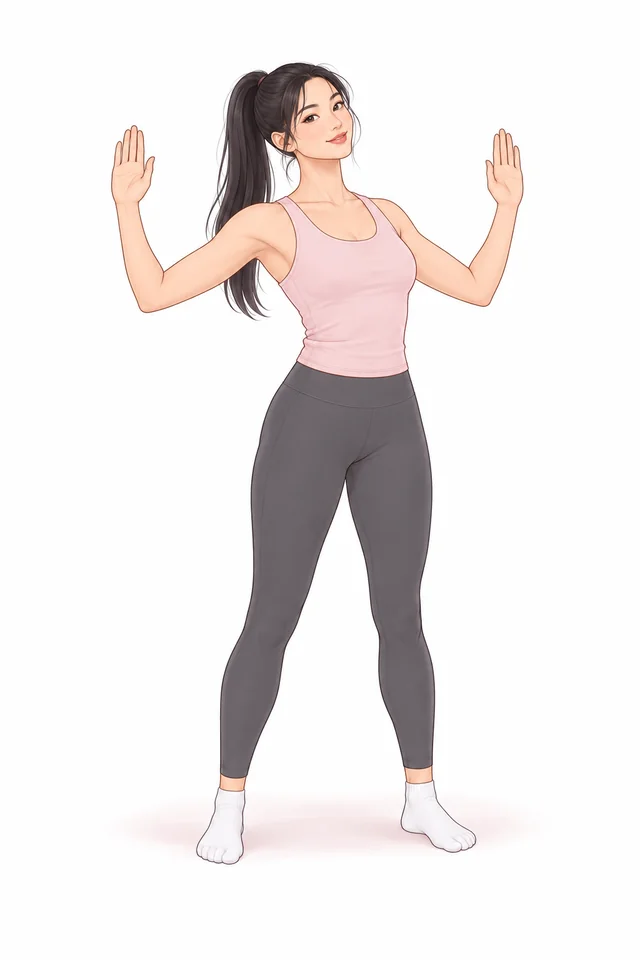
Try the starting position before the timer begins. Check that sleeves, a skirt, fitted clothing, or footwear allow the movement you selected; different clothes may simply call for a different practice or time. Keep your arms clear of screens and neighbours. In a shared space, choose whether an illustrated routine feels more practical than a video with sound. You can also save the movement break for a more private setting.
6. Allow an interruption without losing the plan
Pick a routine whose contents you know, and use the timer controls if a colleague or call interrupts. In Unknot, you can pause, move through the sequence, or finish the session. A custom routine saves your chosen sequence for another day. It does not automatically verify that every move is suitable for a desk; that is why previewing the actual exercises matters.
7. Keep comfort and movement ahead of a perfect posture
Use a comfortable range and stop a movement that hurts rather than trying to reproduce a picture exactly. NHS adult guidance recommends breaking up prolonged sitting with activity, so changing position and moving during the day also matter. Desk stretching is not a diagnosis or a treatment for ongoing pain. Use individual guidance for symptoms or conditions that concern you.
Sources: Mayo Clinic: stretching safely · NHS: adult activity guidance
A workday checklist you can actually use
Confirm your seat or standing space, preview every movement, check your clothing, and decide how you will pause if needed. If one move does not fit, choose a different sequence or setting before starting. Save the practice you can follow comfortably so you can find it at your next break.
Questions before you start
Do desk stretches for women need different exercises?
This guide focuses on practical choice and an inviting experience, not a separate set of movements based on gender. Your setup, ability, symptoms and individual guidance matter more than the audience label.
Can I do every Unknot desk routine without a mat?
No. Some routines include floor movements. Inspect the full exercise list, then choose a suitable sequence or build your own.
Can I use my wheeled office chair?
The NHS sitting-exercise guidance calls for a stable chair without wheels. Arrange an appropriate seat or choose another suitable setting rather than assuming a rolling chair is stable enough.
Sources: NHS: sitting exercises
Can a desk routine fix neck or back pain?
This guide does not promise pain relief or identify a cause. For persistent or concerning symptoms, seek appropriate professional advice. The linked desk-discomfort guides provide general information and care guidance.
Discover your starting point. Build a stretching habit that helps you move more freely.
Unknot is available on the App Store for iPhone.